













Crownplay Casino Promo Code In France

In France, Crownplay helps adult players activate offers, track their balance, and manage limits stress-free in 2026.

Fortune Gems 2 Slot

Table of Contents

  • The Dog House Megaways Slot
  • Lucky Joker 10 Extra Gifts Slot
  • Sword of Ares Slot
  • Floating Dragon Hold & Spin Slot
  • Leprechaun Riches Slot
  • Fruit Cocktail Slot
  • The Dog House Megaways Slot
  • Sword of Ares Slot
  • Fruit Million Slot
  • The Dog House Megaways Slot
  • Fruit Box Slot
  • Big Fisherman Slot
  • Seven Books Unlimited Slot
  • Crownplay Fortune Slot
  • Sword of Ares Slot
  • Floating Dragon Hold & Spin Slot
  • 9 Mad Hats Slot
  • Floating Dragon Hold & Spin Slot
  • Big Bass Splash Slot

Crownplay Promo Code: Error-Free Instructions

An offer code is not a “magic bonus”. It’s a step in a journey: you associate it with your account, trigger a promotion, then check what has been credited (and in what form). If you keep this logic in mind, you avoid 90% of frustrations.
promo 1

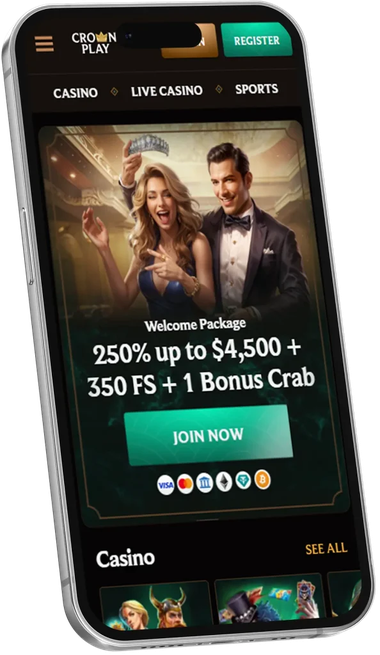
Imagine the scene: you have five minutes, you're on mobile, and you want to activate an offer before starting a session. Most players type quickly, validate, then wonder where the benefit went. The simplest method is to first locate the exact place where activation occurs, and only then confirm an action like depositing or joining the promotion.

Don't try to optimize everything from day one. In practice, a clear offer that is understood and mastered is better than a "bigger" offer full of conditions that push you to play differently than you wish.

Where to Enter the Offer Code Without Making a Mistake

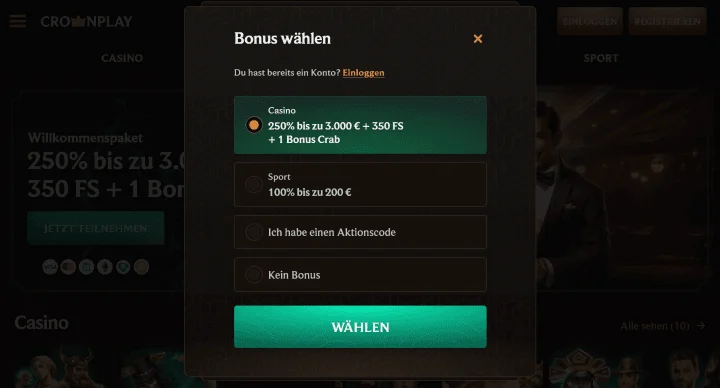
Often, activation is done either in the promotions section or at the time of an action in the checkout. The key point is not "where" in general, but "when" in the sequence: before confirmation, or after opening a specific promotion.

Imagine you enter the code in the wrong place, then switch screens. You think you're done, but nothing is linked to your account. The right routine: open the promotion, read the two basic lines, enter the offer code in the designated field, then confirm exactly the requested action (without skipping steps).

If you are on a phone, avoid frantic copy-pasting. One clean paste, then a check in the history or the promotion status. Repeating ten times doesn't "force" anything, it just increases the risk of error.

When the Offer is Validated and How to Check It

Validation is observed, it cannot be guessed. After activation, look for a clear indicator: "active" promotion, "in progress" bonus, or a line in your history. It's more reliable than relying on an impression.

Imagine you start a game right away, then go back to the checkout thinking "it must have worked." Sometimes yes, sometimes no, and you waste time speculating. Do the opposite: check the status first, then play. You keep control of your budget and your expectations.

Finally, clearly distinguish between real balance and promotional balance if the interface separates them. Many misunderstandings come from this: players see an amount and think it's immediately available, when it's linked to an ongoing offer.

Understanding Bonuses Without Getting Trapped

Promotion terms and conditions are not there to trap you, but they exist, and ignoring them wastes your time. The goal isn't to read a novel, it's to spot the three pieces of information that change everything: what you need to do, which games the offer applies to, and until when.

promo 2

Imagine you want a short, relaxed session, but the offer requires a series of long actions. You end up 'having' to play instead of choosing to play. In such cases, the best decision is sometimes not to activate the offer, or to save it for a time when you'll actually have the time.

A good habit in 2026: decide your limit before deciding on your bonus. Set a budget, a timeframe, then see if the offer fits your plan. If it pushes you to exceed your own rules, it's no longer an advantage, it's pressure.

Also keep in mind that some offers guide game choices. It's neither good nor bad, it's a framework. If you like to explore, it might suit you. If you're the type to always play 'the same thing' and stop quickly, favor the simplest promotions.

And if a condition seems unclear, don't fill in the blanks with assumptions. Check the promotion status and the instructions in the app. When something is important, it's usually written somewhere in the offer details or in your account area.

promo 3

Deposits, Withdrawals, and Verifications on Mobile

Money operations are the area where organization pays the most. No need to be an expert: just be consistent. Same method, consistent data, only one change at a time. It's the difference between 'I understand what's happening' and 'I click everywhere'.

Imagine you make a quick deposit, change your method at the last minute, then go back because you're doubting. You've just created a maze. A simple routine works better: choose, confirm, check status. Only then, adjust.

To help you, here is a practical table focused on common scenarios, without unnecessary jargon. It's for quick diagnosis, not for promising fixed deadlines.

Common Situation

What You Check First

What Most Often Blocks

Simple Action to Take

Deposit in progress but nothing changes

Transaction history

Unstable connection, incomplete confirmation

Refresh, go back to history, avoid restarting

Deposit validated but offer not visible

Promotion status

Activation done out of sequence

Open the promotion, reread the requested step, redo it cleanly once

Withdrawal request 'pending'

Profile and verifications

Missing details, unfinished documents

Complete a step, then wait for status update

Withdrawal refused or cancelled

Chosen method and data consistency

Method change, inconsistent information

Return to a stable method, check account data

Need quick help

Displayed message and exact screen

Description too vague

Note the time, capture the screen, explain the path taken

Choose a Payment Method and Remain Consistent

Consistency is your best ally. Using the same method avoids back-and-forth and makes your history readable. And when a problem arises, you identify the exact sticking point faster.

Imagine you alternate between several methods depending on your mood. During the first check, you no longer know which one you chose, and you waste time 'retesting'. Choose a primary method, keep a secondary one only if necessary, and avoid changing right after an operation.

On mobile, also think about the environment: unstable network, low battery, interruptions. If you feel rushed, postpone the operation to a calmer moment. It's simple advice, but it avoids the silliest mistakes.

Track a Withdrawal Request Without Multiplying Attempts

A request has a status. As long as the status hasn't changed, repeating the same action won't speed it up. On the contrary, you add confusion: multiple attempts, multiple messages, and you no longer know which one is the "right" one.

Imagine clicking three times because the screen slowed down. You think "it will pass," but you're mainly creating doubt. The proper method: make a single request, check in the history that it's properly registered, then let the status evolve. If a message asks you for a specific step, do that step and only that one.

If you tend to stress, set yourself a rule: no more than one check every few hours, and always via the same status page. This prevents you from living in the cashier.

Small Checks That Prevent Blocks

Most blocks come from details: incomplete profile, inconsistent information, forgotten confirmation. It's not "against you," it's a normal filter for digital services.

Imagine discovering a verification just when you want to cash out. It's frustrating. The solution is simple: check your profile when you're calm, not when you're in a hurry. A clean profile makes everything else smoother: deposit, withdrawal, support.

Account Security and Game Control

Security isn't just a word. It's your ability to log in easily, protect your account, and stop when you need to. In 2026, true comfort is feeling you have accessible brakes, not having to rely on willpower.

Imagine an evening where you play "just a little," then your attention wanes. This is precisely where control tools come in handy: spending limits, session reminders, breaks. They don't judge; they cut the momentum when you're no longer thinking clearly.

In France, keep a simple logic: personal account, personal device, stable habits. The less you improvise, the less you expose yourself to unpleasant situations (forgotten password, unwanted access, confusing operations).

Limits, Breaks, and Self-Exclusion: The Right Reflexes

Setting a limit before you start changes everything. You no longer have to negotiate with yourself in the middle of the session. You play within a framework, then you stop when the framework says stop.

Imagine you're upset after a difficult day. You're looking for a distraction, but you feel you might slip up. In this case, a temporary break is an adult decision: you cut yourself off from the flow, resume later, and avoid a session you would regret.

If you find that short breaks aren't enough, self-exclusion becomes a safety switch. It's not a punishment; it's a useful barrier to protect your time and budget.

Connection and Device: Reducing Daily Risks

Secure access is a habit. Strong password, locked device, relevant security notifications. It seems basic, but it's what prevents problems that ruin the experience.

Imagine leaving your phone on a table, screen on. A quick action can be enough to create an awkward situation. Automatic lock, biometrics if you like them, and above all: don't share your credentials. A casino account is not a "family" account.

And if you change phones, make a clean transition: one main device at a time, confirmations made calmly. You reduce alerts and maintain a stable connection.

Crownplay Promo Code: Why We Sometimes See It

You might encounter multilingual labels when reading user feedback or when a promotion circulates in multiple countries. It's not a mystery: it's often the same idea (an offer code), presented in another language.

Imagine receiving a code via a group chat, with unusual accents or characters. You copy it, it fails, and you too quickly conclude that "it doesn't work." In reality, the problem is often technical: an invisible character, a space, or a different version of the offer.

The most effective approach: don't insist, but clarify. Identify the exact promotion, check if it's intended for your account, then enter the offer code in the correct field, at the right time.

Copy Without Invisible Characters

Invisible characters are the silent trap: extra spaces, line breaks, stuck-on punctuation. Copying from a messaging app sometimes adds these details without you seeing them.

Imagine pasting the code, then seeing an immediate rejection. Before trying ten times, paste it into a note first, delete the spaces, then retype it manually if needed. A clean manual entry is better than a dirty copy-paste.

On mobile, also avoid autocorrect. It "helps" and it breaks things. If your keyboard changes a character, you'll waste time looking for a mistake you don't even suspect.

What to Do If the Code Is Rejected

A rejection isn't necessarily a bug. It could mean: promotion not eligible, code expired, step not followed, or a simple entry error. The important thing is to test one hypothesis at a time.

Imagine changing three things at once (payment method, amount, promotion). You'll never know what fixed it or what broke it. The proper method: go back to the last known good point, make one clean attempt, then check the status in your promotions area.

If the rejection persists, prepare useful information for support: promotion name, exact message displayed, and when you entered it. Support responds faster when you provide a clear path rather than a "it doesn't work."

Support and Quick Problem Resolution

Support is an accelerator, provided you give them facts. The player saves time when they describe an action, a screen, a message. Support saves time when they don't have to guess.

Imagine writing "I can't activate the offer" with nothing more. You receive a generic response, then you get annoyed. If, on the contrary, you indicate "I opened the promotion, I entered the offer code, then I saw this message," the conversation becomes direct.

Another useful rule: don't contact support when stressed. Take two minutes, make one last clean attempt, capture the screen, then write. These two minutes often reduce an hour of back-and-forth.

Contact Support With the Right Details

An effective message contains three elements: where you were, what you did, what you saw. Nothing more. And if you can, add the time and the device used.

Imagine being stuck at checkout. Say it precisely: "I'm at checkout, after confirmation, the screen stays on loading." This type of sentence helps support understand the context without bombarding you with questions.

Also avoid mixing multiple topics. One ticket = one problem. You'll get a faster response, and you'll keep your conversation history readable.

3-Minute Troubleshooting Checklist

Before writing, do a mini-diagnostic: check the connection, close and reopen the app, check the history, then perform a single clean action. It's short, but it resolves many situations.

Imagine the app slows down and you tap everywhere. You amplify the problem. If you breathe, return to the starting point, and perform a single path again, you regain a clear situation. And if it still doesn't work, you already have precise steps to tell support.

Read Reviews in France: Practical Sorting in 2026

Reviews are useful when you use them as a tool, not as a verdict. Look for comments that talk about journeys: registration, verifications, checkout, support, game control. Superlatives, on the other hand, are often noise.

Imagine reading ten reviews and seeing two recurring themes: “simple navigation” and “verifications to anticipate”. It doesn't tell you if you'll love it, but it prepares you. You know where to look during your own test, and you avoid surprises.

Also pay attention to timing. A review written in the heat of the moment after a failure resembles a fit of anger. A useful review explains the failure and the context. This is the kind of content that helps you decide without getting carried away by emotion.

Test for Yourself Without Spending Too Much

Smart testing doesn't need to be expensive. You can explore the profile, identify limits, understand the checkout, and check the clarity of the menus before committing.

Imagine you just want to gauge the level of control. In this case, your goal isn't to “play a lot,” but to verify that you know how to stop. You have a short session, check the history, then close. If everything is clear, you'll come back later. Otherwise, you move on, without regret.

Frequently Asked Questions

Start by opening the exact promotion, then follow the sequence in order: enter the offer code in the designated field, confirm the requested action, and check the status in the promotions section or history. Imagine you're in a hurry and paste the code in the wrong place: you think you've activated it, but nothing is linked to your account. The safest method is to make a single clean attempt, then check the status before starting a session, to keep a clear view of your balance and terms.

Check three simple things: which games the offer applies to, what actions are expected (e.g., activation or deposit), and until when the offer is valid. Imagine a short session after work: if the promotion requires a long process, it puts unnecessary pressure on you. First decide your budget and duration, then choose an offer that matches your pace, rather than the other way around, and keep your limits active to stay in control of the session.

An immediate refusal often comes from a typing error, an invisible character, or an offer not eligible for your account. Imagine copying from a messaging app: an extra space is enough to break the activation, and you waste time starting over. The right approach is to paste into a note, clean up spaces, retype if necessary, then check the promotion status; if the refusal persists, change only one thing at a time and note the displayed message.

Follow a short routine: choose a method, check your personal limit, confirm by reading the summary, then check the transaction in the history. Imagine your connection is unstable and you click several times: you create doubt about what has been validated. A single clean path, followed by a status check, gives you a readable situation and reduces unnecessary actions when you are on the go.

Use the pause or limit tools as soon as you feel you are playing “on autopilot”. Imagine a stressful day where you are looking for a distraction: you risk exceeding your own plan without realizing it. A temporary break cuts you off from the flow and gives you time to reflect; if you notice the situation repeating, self-exclusion is a practical lock that protects your budget and peace of mind without relying solely on willpower.

Explain the exact path: where you were (checkout, promotion, profile), what you did, and what you see (message or blockage), adding the time and device if possible. Imagine writing only “it doesn’t work”: you will receive a general response and will have to follow up. A precise message, focused on a single issue, allows support to understand immediately and guide you with concrete steps, without unnecessary back-and-forth.

A useful review describes actions and results: registration, searching for limits, understanding the checkout, interacting with support. Imagine two comments: one is emotional and vague, the other tells a clear journey with a precise detail about what was easy or blocking. The second helps you anticipate and test intelligently, because it tells you where to look and what to check during your own attempt, instead of pushing you to decide on impulse.