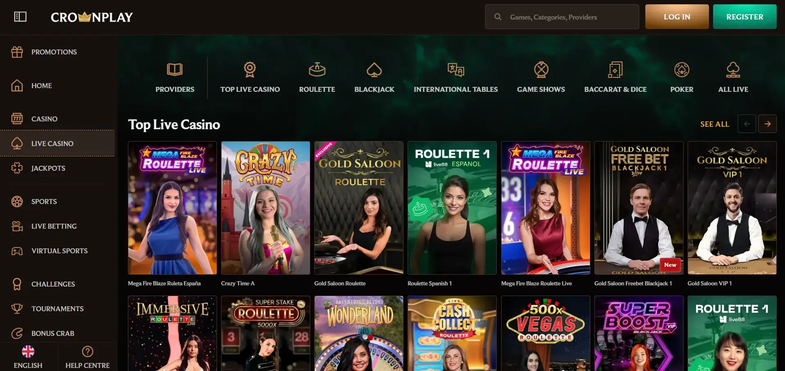













Understanding Crownplay Live Casino Without Rushing
Live casino is attractive because it resembles a "real" table more than a flashing screen. But for the experience to remain enjoyable, it must be treated as a session, not an endless loop. Start by observing the interface, the proposed bets, the camera options, and the game controls before betting anything.

Imagine opening a table from your phone during a break. You have two minutes to decide, then your break ends. In this case, the right reflex is not to "try a shot," but to locate where the history, betting settings, and table exit are, so you can stop cleanly without frustration.
The other key point is pace. Live play sometimes pushes you to chain actions because the game continues, but you can regain control by setting a simple rule: one table, one goal, one exit. Once this goal is reached (or if the game doesn't suit you), you change or stop. This logic may seem cold, yet it avoids "endless" sessions that rarely end as hoped.
Table Pace And Time Management
Live play isn't difficult, it's fast. The difference is significant. If you arrive without a plan, you react instead of deciding, and you end up following the table's tempo rather than your own.
Suppose you start a table just before a call. You bet once, then tell yourself, "one more, and I'll stop." The simplest thing is to lock in your decision beforehand: number of rounds, maximum amount per round, and an alarm on your phone. It's not glamorous, but it's precisely what makes the session manageable.
To maintain a healthy pace, structure your actions: test the minimum bet, observe a few rounds, then make a clear decision (continue, change, stop). And when you change, do it for a specific reason: table too slow, minimum bet too high, atmosphere not to your liking. Avoid impulsive changes "because it's not working."
Live Atmosphere: What You Really See
Live play gives an impression of closeness, but it remains an interface experience. You see a table, a dealer, bets, results, and especially useful information: limits, rules, sometimes a reminder of available options. Get into the habit of reading these details as you would read a sign before hitting the road.
If you arrive at a table and everything seems "too fast," don't force it. Close it, take a breath, then return to a calmer table or a lower bet. Many players make the opposite mistake: they hang on to "prove" to themselves that they can keep up. In practice, this is rarely mentally profitable.
Also think about your surroundings. Live play is best experienced with reasonable volume, a stable network, and a comfortable position. When you play while walking or changing connections, tension rises unnecessarily, and you make more hasty decisions. A small routine (setting up, checking the network, opening history) changes the feel of the game.